
Systematics
Unity in Diversity
12 Systems
Systematics Topics
- A Notebook on Thinking in the Six Triadic Forms
- Ken Pledge – Concrete Significance of Numbers in Experience
- Martin Zwick Systematics Papers
- Archives
- Compendium
- Complexity Rising **NEW** July 2017
- Enneagram of Personal Life
- Gathering 6
- Introduction to Systematics
- Legominism
- Logo Visual Thinking
- Numbers in the Gospel of St. John
- On Time
- Recommended Reading
- Systematics: A New Technique in Thinking
- Singing in the Forest
- Structural Communications
- Systematics Basics
- Systematics Videos
- The J.G. Bennett Online Library
- The Origin of Systematics in Gurdjieff’s Talks
- Understanding Complexity
- Progression of Categories
- Synchronicity and Emergence
Conflict and Co-Creation
Conflict and Co-Creation
Harmony through Conflict is an intramural process: the conflict is within the system being transformed. Healing through Co-Creation is an intermural process: the substance of the system is transformed with outside help. Transformation is, at least theoretically, an individual work. Transmutation is something we do for and with each other.
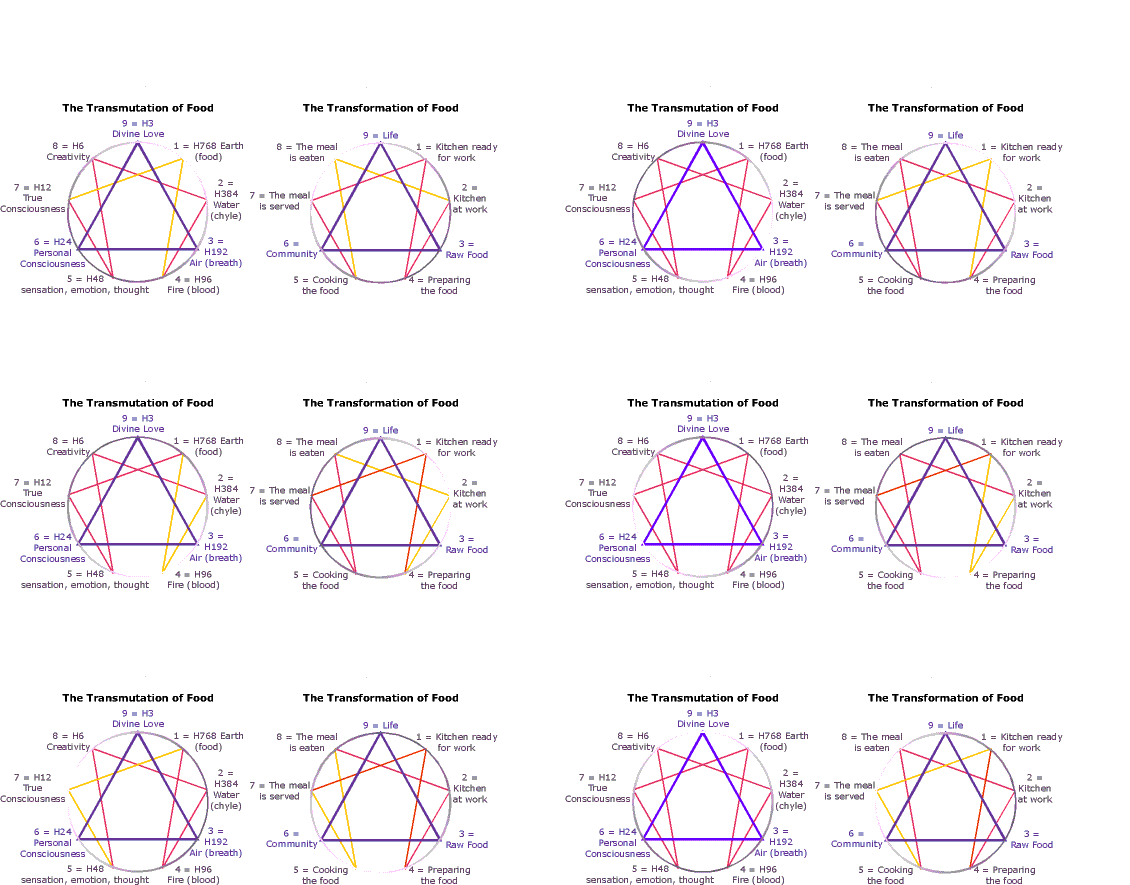
Consider the process of cooking and eating a meal – the raw food is transformed as it becomes a meal and is eaten. But after the eating, the subsequent evolution of the food is through transubstantiation: it becomes bone, muscle, blood, nerve, automatism, and (if the breath is connected properly) sensation, consciousness, creativity, etc.
Similarly, there is a transformation that takes place when we “come into the Work.” People who are completely identified with false personality are not able to have the kind of experiences that the Work involves. But once we are “in the Work,” there is no longer a need for transformation: indeed, the continued fixation on harmony through conflict is like going round and round through a revolving entrance door. Fixating on Harmony Through Conflict/Transformation, we keep circling from the lobby to the street and back again, never realizing that something entirely different is required to go further. When we stop forcing ourselves through a useless process of transformation, we can open ourselves to the possibility of transubstantiation. At the same time we can begin to facilitate the process for other people who are “in the Work” and are open to possiblity of exchange.
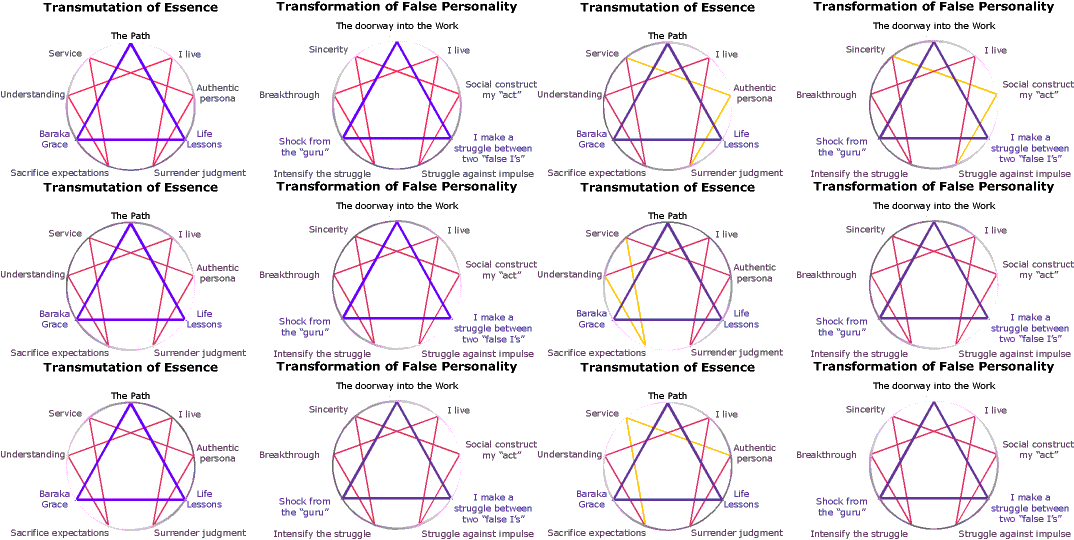
If the Work were a process of transformation, then one would expect the Shivapuri Baba, for instance, to have a form that is different from a normal human body. He did not: the form is not changed. On the other hand, consider the story of St. Theresa of Avila, whose body did not decay and smelled like roses. Or Paramahansa Yogananda, about whom the same story is told. Or the “rainbow body” stories heard in Tibet. Or the observed heart warmth and lack of rigor mortis in the body of one of Sogyal Rinpoche’s teachers, as reported by the nurses and doctors in the Western hospital where he died. These phenomena indicate a process of transmutation or transubstantiation in which the form remains the same but the substance is changed.
Transmutation and Transformation | How this Essay Came to be Written