
Systematics
Unity in Diversity
12 Systems
Systematics Topics
- A Notebook on Thinking in the Six Triadic Forms
- Ken Pledge – Concrete Significance of Numbers in Experience
- Martin Zwick Systematics Papers
- Archives
- Compendium
- Complexity Rising **NEW** July 2017
- Enneagram of Personal Life
- Gathering 6
- Introduction to Systematics
- Legominism
- Logo Visual Thinking
- Numbers in the Gospel of St. John
- On Time
- Recommended Reading
- Systematics: A New Technique in Thinking
- Singing in the Forest
- Structural Communications
- Systematics Basics
- Systematics Videos
- The J.G. Bennett Online Library
- The Origin of Systematics in Gurdjieff’s Talks
- Understanding Complexity
- Progression of Categories
- Synchronicity and Emergence
Harmony Through Conflict
The Enneagram is usually depicted as a process of “Harmony through Conflict.” The points 1 and 2 (re, mi) represent an existing form in disharmony. The first or mechanical shock at point 3 introduces a new energy into the system. This causes conflict at points 4 and 5 (fa, sol). At point 6 a second shock destroys the initally existing form. The “creative destruction” liberates energy, part of which is used to carry the process to a state of harmony and create a new form at points 7 and 8 (la, si). At point 9 a new do is sounded and the process of transformation begins again.
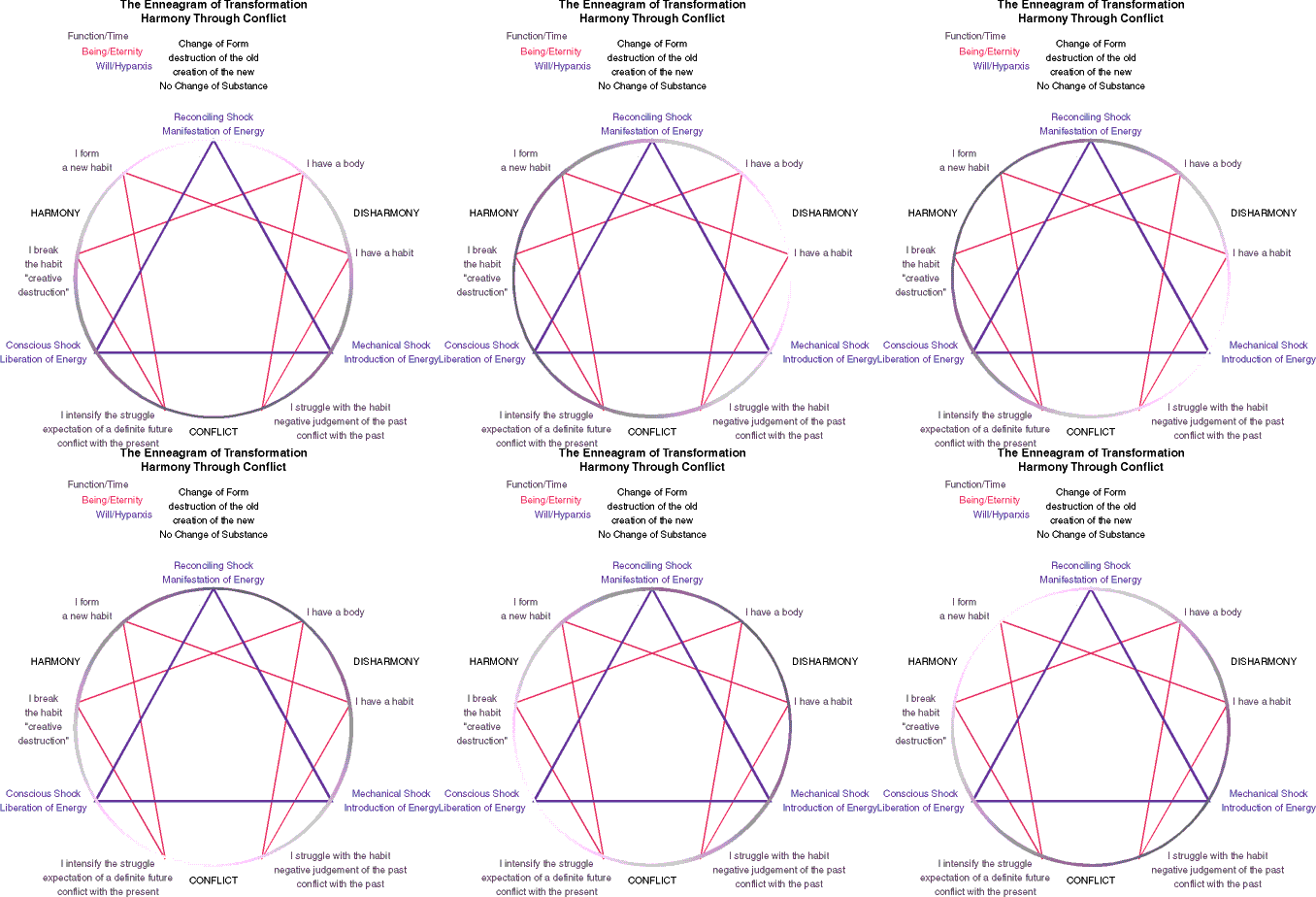
An example of this process from Gurdjieff’s autobiography is the passage describing his intense inner struggle after the second almost fatal bullet. Klausbernd Vollmar’s book, The Secret of Enneagrams: Mapping the Personality gives an example of progressing from unhappiness to happiness through struggle: harmony through conflict. Historical examples include the World Wars that transformed the map of Europe, or the Civil War that united the states of America.
Heptaparaparshinokh, Triamazikamno and Reciprocal Maintenance | Healing Through Co-Creation