
Systematics
Unity in Diversity
12 Systems
Systematics Topics
- A Notebook on Thinking in the Six Triadic Forms
- Ken Pledge – Concrete Significance of Numbers in Experience
- Martin Zwick Systematics Papers
- Archives
- Compendium
- Complexity Rising **NEW** July 2017
- Enneagram of Personal Life
- Gathering 6
- Introduction to Systematics
- Legominism
- Logo Visual Thinking
- Numbers in the Gospel of St. John
- On Time
- Recommended Reading
- Systematics: A New Technique in Thinking
- Singing in the Forest
- Structural Communications
- Systematics Basics
- Systematics Videos
- The J.G. Bennett Online Library
- The Origin of Systematics in Gurdjieff’s Talks
- Understanding Complexity
- Progression of Categories
- Synchronicity and Emergence
Heptaparaparshinokh, Triamazikamno and Reciprocal Maintenance
Heptaparaparshinokh, Triamazikamno and Reciprocal Maintenance
Gurdjieff said that not all enneagrams have a triangle – those that do not require interaction with other enneagrams at the “shock points” 3, 6 and 9. This necessity of “borrowing” the momentum, energy or output of another process to advance to the next stage is the Enneagram representation of Ashiata Shiemash: “I eat and am eaten,” or in the Buddhist formulation “Through the arising of that, this comes into being; through the cessation of that, this ceases to be.”
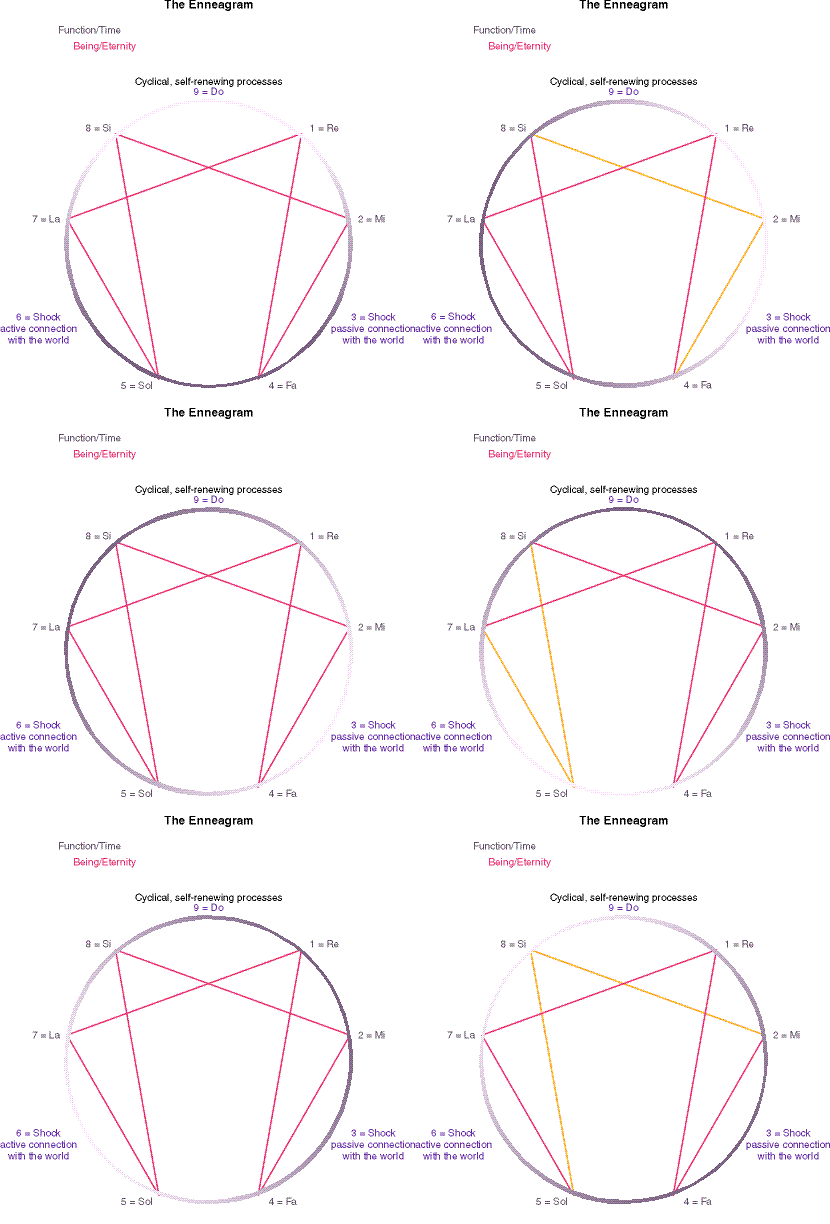
The asymmetrical hexagon shows the being and awareness of the director or experiencer of the process as it unfolds in eternity. At three points in the process the attention/intention is turned toward the external. At each of the other six points the opportunity exists to connect not only with what is happening in time but with what can happen in the future (1, 2, 5) or what has happened in the past (4, 7, 8). The strength of the attention and the quality of intention or meaning that are brought to bear at these points have a powerful influence on the course of the process as it manifests in time.
 |
The inner triangle shows the operation of Will in the dimension Bennett called hyparxis. These are the points at which the process can stop or change direction.
Transformation & Transubstantiation on the Enneagram | Harmony Through Conflict